
What Is Vegetable Tanned Leather? A Complete Guide to Traditional Leather Craftsmanship
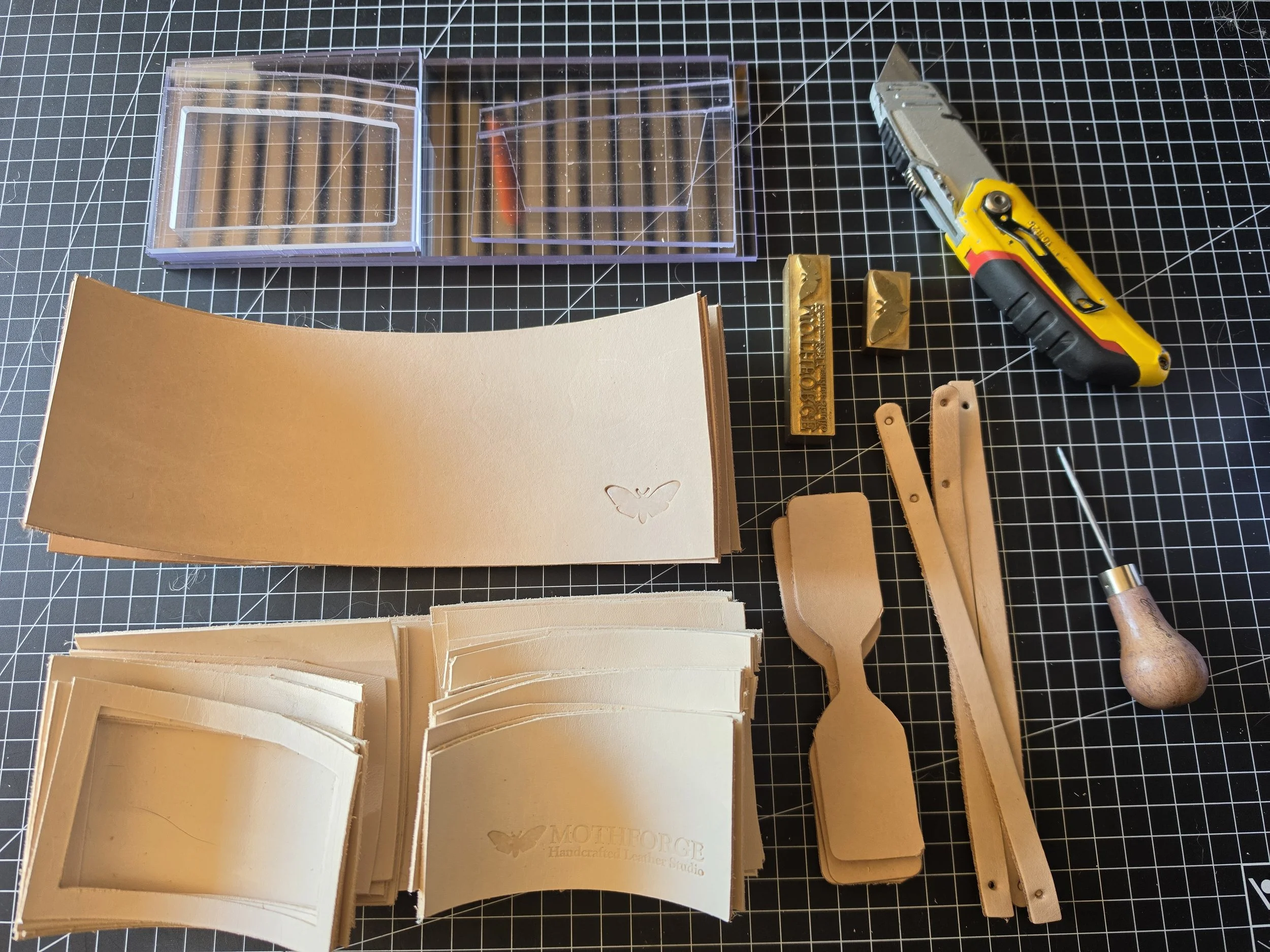
When shopping for high-quality leather goods, you've probably come across the term vegetable tanned leather. It's often associated with premium wallets, belts, bags, and handcrafted leather accessories, but what exactly does it mean? Why is it considered superior by leather artisans and enthusiasts, and what makes it different from other types of leather?
Vegetable tanned leather is one of the oldest and most traditional forms of leather production, dating back thousands of years. Unlike modern mass-production methods that rely heavily on synthetic chemicals, vegetable tanning uses natural tannins extracted from plants, bark, leaves, roots, and fruits to transform animal hides into durable, beautiful leather.
In this guide, we'll explore what vegetable tanned leather is, how it's made, its advantages and disadvantages, and why many craftsmen still choose it despite the availability of cheaper alternatives.
Understanding Vegetable Tanned Leather
Vegetable tanned leather is leather that has been preserved and transformed using natural tannins found in plant matter. Tannins are naturally occurring compounds present in various trees and plants, including:
Oak bark
Chestnut wood
Mimosa bark
Quebracho wood
Tara pods
Sumac leaves
These tannins bind with the proteins in animal hides, stabilising them and preventing decomposition. The result is a durable material that retains much of its natural character while becoming suitable for use in leather goods.
The term "vegetable tanned" does not mean the leather is made from vegetables. Rather, it refers to the plant-based tanning agents used during the tanning process.
Today, vegetable tanning accounts for only a small percentage of global leather production, making it a more specialised and often premium material.
A Brief History of Vegetable Tanning
Vegetable tanning is believed to be one of humanity's oldest leather-making techniques. Ancient civilisations, including the Egyptians, Romans, Greeks, and Chinese, all developed methods for preserving hides using natural plant extracts.
For centuries, vegetable tanning was the primary method used worldwide. Traditional tanneries relied on local tree bark and plant materials to create tanning solutions, often soaking hides for months to achieve the desired result.
The industrial revolution introduced faster tanning methods, including chrome tanning, which dramatically reduced production times. While chrome tanning became dominant due to efficiency and lower costs, vegetable tanning remained popular among craftsmen who valued quality, longevity, and traditional methods.
Today, some of the world's most respected tanneries continue to use vegetable tanning techniques that have changed very little over generations.
How Vegetable Tanned Leather Is Made
Creating vegetable tanned leather is a lengthy and highly skilled process. Unlike chrome tanning, which can be completed in a matter of days, vegetable tanning often takes several weeks or even months.
Step 1: Preparing the Hide
The process begins with raw animal hides, most commonly cowhide.
The hide is cleaned thoroughly to remove dirt, hair, flesh, and excess fat. This preparation ensures that tannins can penetrate evenly throughout the material.
Step 2: Liming and Cleaning
The hides are soaked in a lime solution that loosens hair and unwanted tissue. Afterward, they are carefully cleaned and neutralised to prepare them for tanning.
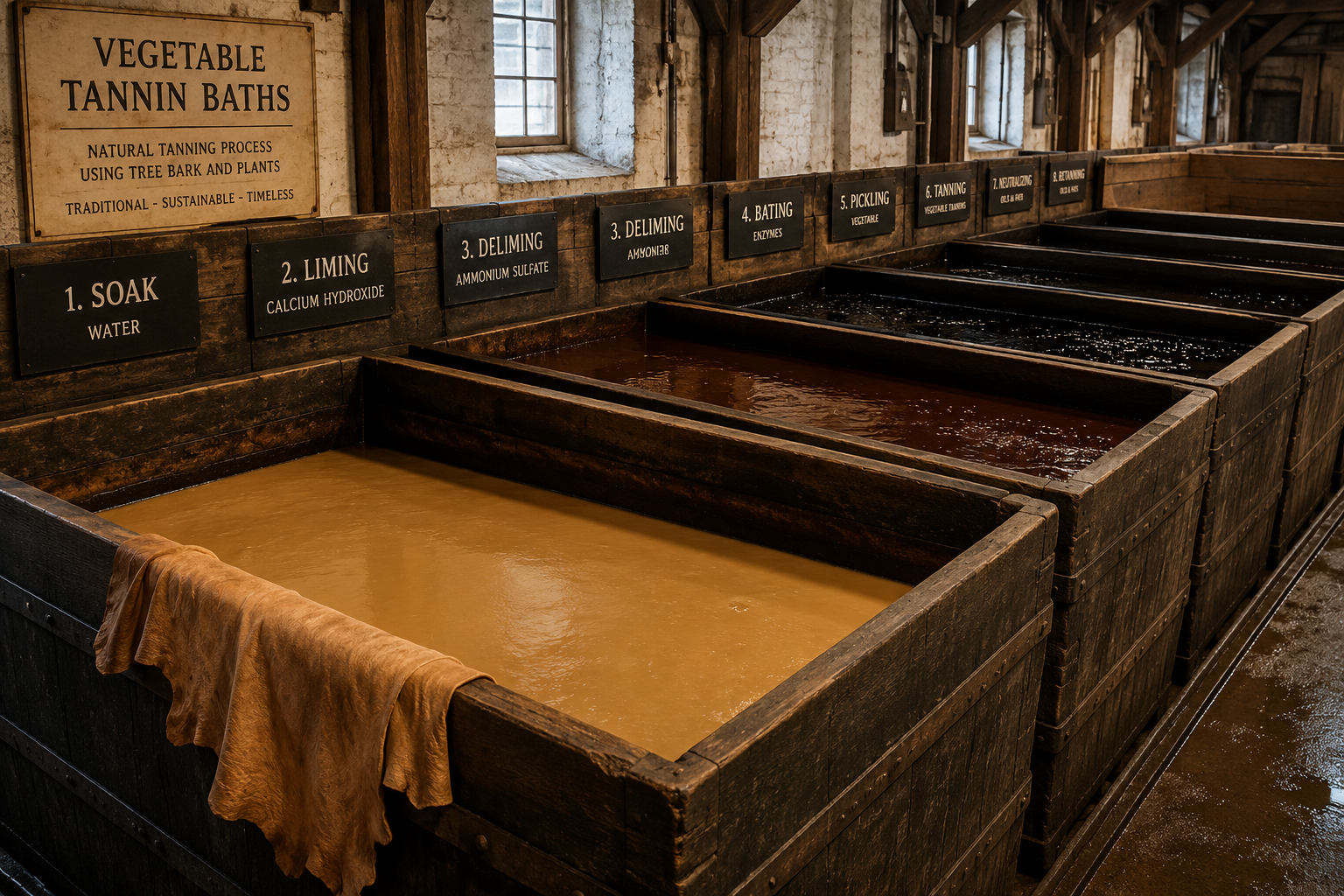
Step 3: Vegetable Tannin Baths
The hides are gradually immersed in increasingly concentrated tanning solutions made from natural plant extracts.
This stage is the heart of the vegetable tanning process.
Over time, tannins penetrate deep into the hide, bonding with collagen fibres and transforming the raw skin into leather.
Traditional pit tanning methods may involve moving hides through multiple vats over several months.
Step 4: Drying and Conditioning
Once tanning is complete, the leather is dried slowly under controlled conditions.
Natural oils and conditioners may be added to maintain flexibility and improve durability.
Step 5: Finishing
Depending on the intended use, the leather may be:
Dyed
Burnished
Polished
Waxed
Oiled
Embossed
Many vegetable tanned leathers are left relatively natural, allowing their character to develop over time.
What Makes Vegetable Tanned Leather Different?
The primary difference lies in the tanning method itself.
Most modern leather is chrome tanned using chromium salts and synthetic chemicals. Chrome tanning is significantly faster and less expensive, making it suitable for mass production.
Vegetable tanning, by contrast, emphasises natural materials, craftsmanship, and longevity.
The result is a leather that behaves very differently from chrome tanned alternatives.
Vegetable tanned leather typically:
Feels firmer initially
Develops a rich patina over time
Ages beautifully
Moulds to its owner and usage patterns
Contains fewer synthetic chemicals
Displays more natural markings and character
These qualities make it highly desirable for handcrafted leather goods.
The Beauty of Patina
One of the most celebrated features of vegetable tanned leather is its ability to develop a patina.
Patina refers to the gradual change in appearance that occurs through exposure to:
Sunlight
Skin oils
Moisture
Handling
Everyday use
A new vegetable tanned leather wallet may begin as a pale tan or natural beige colour. Over months and years, it gradually darkens into rich shades of honey, amber, caramel, chestnut, or deep brown.
Every piece develops its own unique character.
No two items age exactly alike because every owner uses and handles their leather goods differently.
For many enthusiasts, this evolving appearance is one of the greatest pleasures of owning vegetable tanned leather.
Why Leather Craftsmen Prefer Vegetable Tanned Leather
Many traditional leather workers choose vegetable tanned leather because it offers exceptional working properties.
Excellent Tooling and Carving
Vegetable tanned leather can be dampened and stamped with intricate designs.
This allows craftsmen to create:
Floral patterns
Geometric tooling
Personalised initials
Decorative artwork
Chrome tanned leather generally cannot hold these impressions as effectively.
Superior Edge Finishing
One hallmark of premium leather craftsmanship is a beautifully finished edge.
Vegetable tanned leather burnishes exceptionally well, allowing artisans to create smooth, polished edges using water, waxes, and friction.
The result is a refined appearance that is difficult to achieve with many chrome tanned leathers.
Better Structure
Because it starts firmer, vegetable tanned leather provides excellent structure for:
Belts
Notebook covers
Sheaths
It maintains its shape while gradually becoming more supple through use.
Environmental Considerations
Vegetable tanning is often viewed as a more environmentally conscious tanning method.
Since it relies primarily on natural plant extracts, it generally requires fewer synthetic chemicals than chrome tanning.
Some potential environmental advantages include:
Renewable tannin sources
Reduced reliance on heavy metals
Biodegradable tanning compounds
Traditional low-impact production methods
However, it's important to note that all leather production has environmental impacts, including water use, energy consumption, and livestock-related considerations.
The sustainability of vegetable tanned leather depends greatly on the practices of individual tanneries and manufacturers.
Common Uses for Vegetable Tanned Leather
Because of its strength, durability, and ability to age beautifully, vegetable tanned leather is widely used in premium handcrafted goods.
Popular applications include:
Wallets
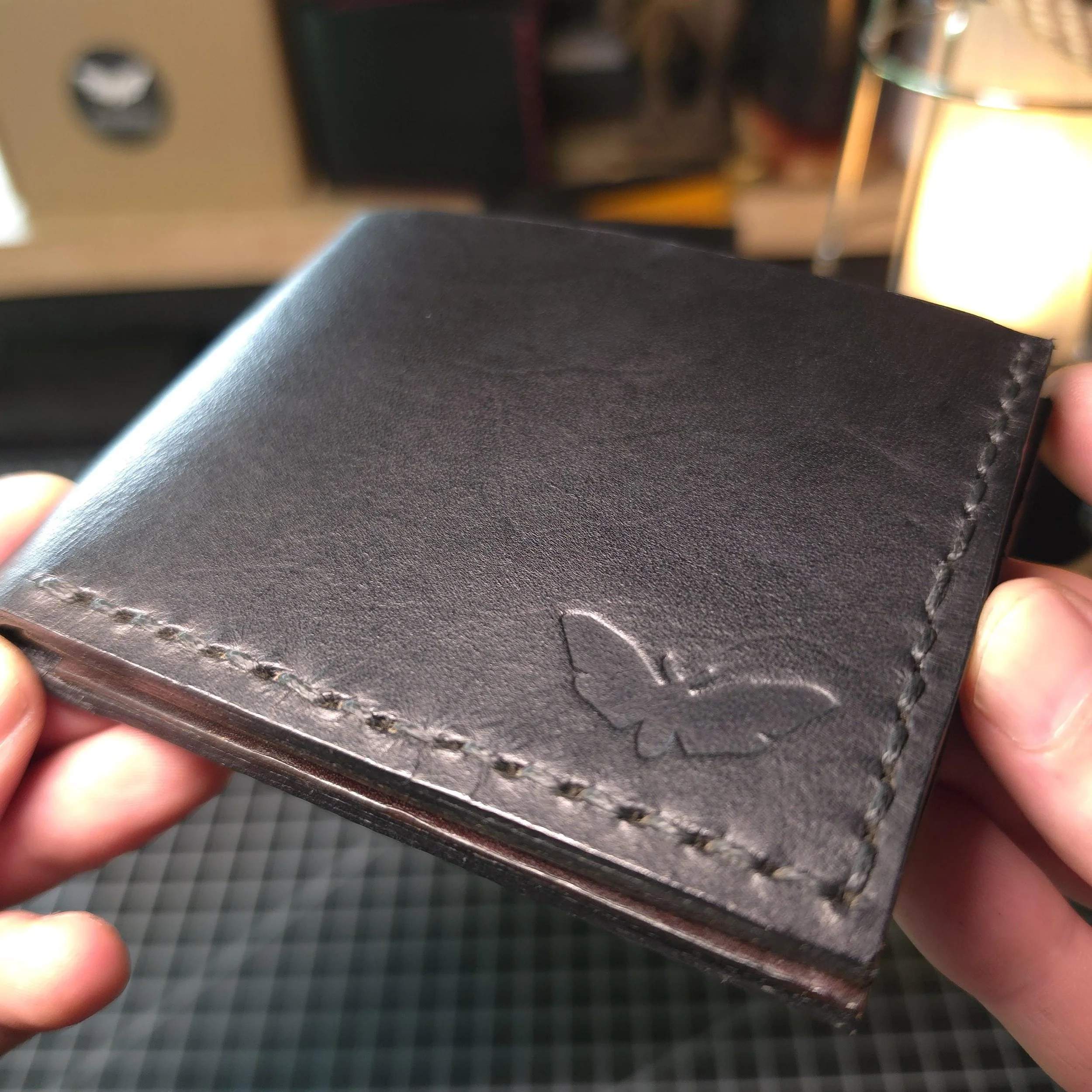
Handmade wallets are among the most common vegetable tanned leather products.
The leather develops character with daily use while maintaining structural integrity for many years.
Belts
Vegetable tanned leather provides the strength and rigidity needed for long-lasting belts.
Many high-quality belts improve in appearance as they age.
Bags
Premium satchels, messenger bags, and briefcases often utilise vegetable tanned leather for its durability and timeless aesthetic.
Watch Straps
Leather watch straps made from vegetable tanned leather mould comfortably to the wrist while developing unique patina.
Notebook Covers
The firmness and elegance of vegetable tanned leather make it ideal for journals and planners.
Glasses Cases
Handcrafted glasses cases benefit from the protective structure and attractive ageing characteristics of vegetable tanned leather.
Advantages of Vegetable Tanned Leather
There are many reasons why discerning buyers seek out vegetable tanned leather products.
Durability
Properly cared for vegetable tanned leather can last decades.
Many leather goods are passed down through generations.
Unique Appearance
Natural grain patterns, scars, and markings create individuality that cannot be replicated in synthetic materials.
Beautiful Ageing
The development of patina adds personality and richness over time.
Natural Materials
The tanning process relies on plant-derived tannins rather than chromium salts.
Repairability
High-quality vegetable tanned leather products can often be repaired, restored, or refinished.
Timeless Appeal
The classic appearance never goes out of style and suits both traditional and contemporary designs.
Potential Drawbacks
Although vegetable tanned leather offers many advantages, it may not be ideal for every application.
Higher Cost
The lengthy tanning process requires more time, labour, and expertise, resulting in higher prices.
Water Sensitivity
Vegetable tanned leather absorbs moisture more readily than some chrome tanned alternatives.
Excessive exposure to water can cause staining or temporary darkening.
Longer Break-In Period
New vegetable tanned leather can feel firm or stiff initially.
Regular use gradually softens the material while maintaining durability.
Colour Changes
Some users may not appreciate the way natural leather darkens over time.
However, many enthusiasts consider this one of its greatest strengths.
How to Care for Vegetable Tanned Leather
Proper maintenance helps ensure your leather goods remain beautiful for years.
Keep It Clean
Remove dust and dirt using a soft dry cloth.
Avoid harsh cleaning products.
Condition Occasionally
Use a quality leather conditioner sparingly to prevent excessive drying.
Over-conditioning can soften the leather unnecessarily.
Protect from Excessive Moisture
If the leather becomes wet:
Blot excess moisture gently.
Allow it to dry naturally at room temperature.
Avoid direct heat sources such as radiators or hair dryers.
Store Correctly
Store leather goods in a cool, dry environment away from prolonged direct sunlight.
Embrace Patina
Minor scratches, marks, and colour changes are part of the natural ageing process and contribute to the leather's character.
How to Identify Genuine Vegetable Tanned Leather
When shopping for leather goods, consider the following indicators:
Natural earthy smell rather than chemical odours
Visible grain variation and natural markings
Firm feel when new
Gradual colour changes over time
Information from reputable makers regarding tanning methods
Transparency about leather source and tannery
Many quality artisans proudly advertise the use of vegetable tanned leather because it represents a commitment to traditional craftsmanship.
Is Vegetable Tanned Leather Worth It?
For those seeking longevity, craftsmanship, and character, the answer is often yes.
Vegetable tanned leather offers something increasingly rare in modern consumer goods: the ability to improve with age.
Rather than wearing out and being replaced, a well-made vegetable tanned leather wallet, belt, or bag often becomes more attractive and personal through years of use.
The initial investment may be higher, but many owners find the durability, unique appearance, and evolving patina justify the cost many times over.
Final Thoughts
Vegetable tanned leather represents a tradition that stretches back thousands of years. Crafted using natural plant tannins and time-honoured techniques, it produces a material renowned for durability, beauty, and individuality.
From handcrafted wallets and card holders to belts, bags, and glasses cases, vegetable tanned leather offers a distinctive experience that mass-produced materials struggle to replicate. Its ability to develop a rich patina, respond to use, and tell the story of its owner makes every piece unique.
In a world increasingly dominated by disposable products, vegetable tanned leather stands as a reminder that quality craftsmanship, natural materials, and thoughtful design can create items built not merely to be used, but to be treasured for years—or even generations—to come.